
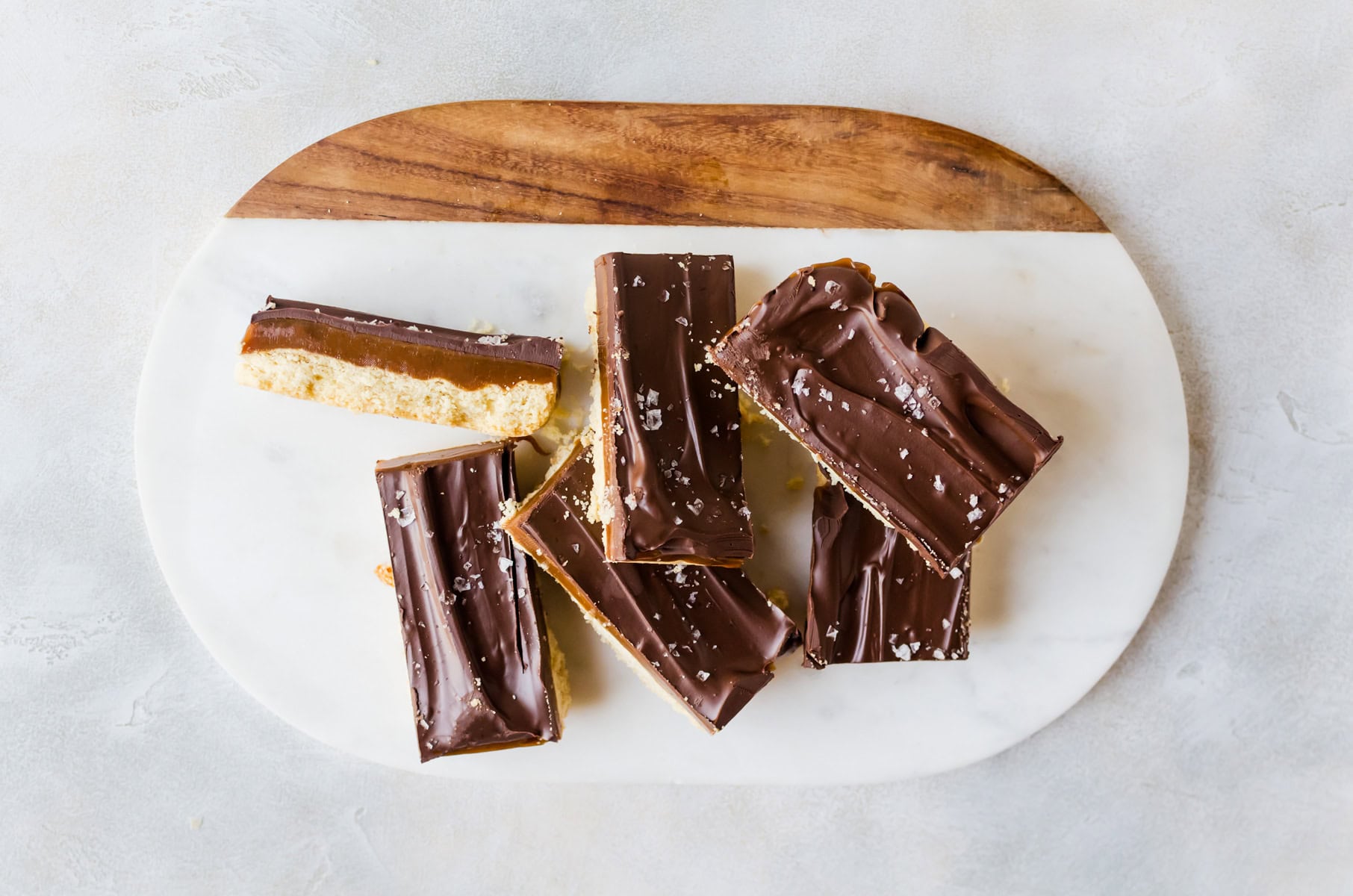
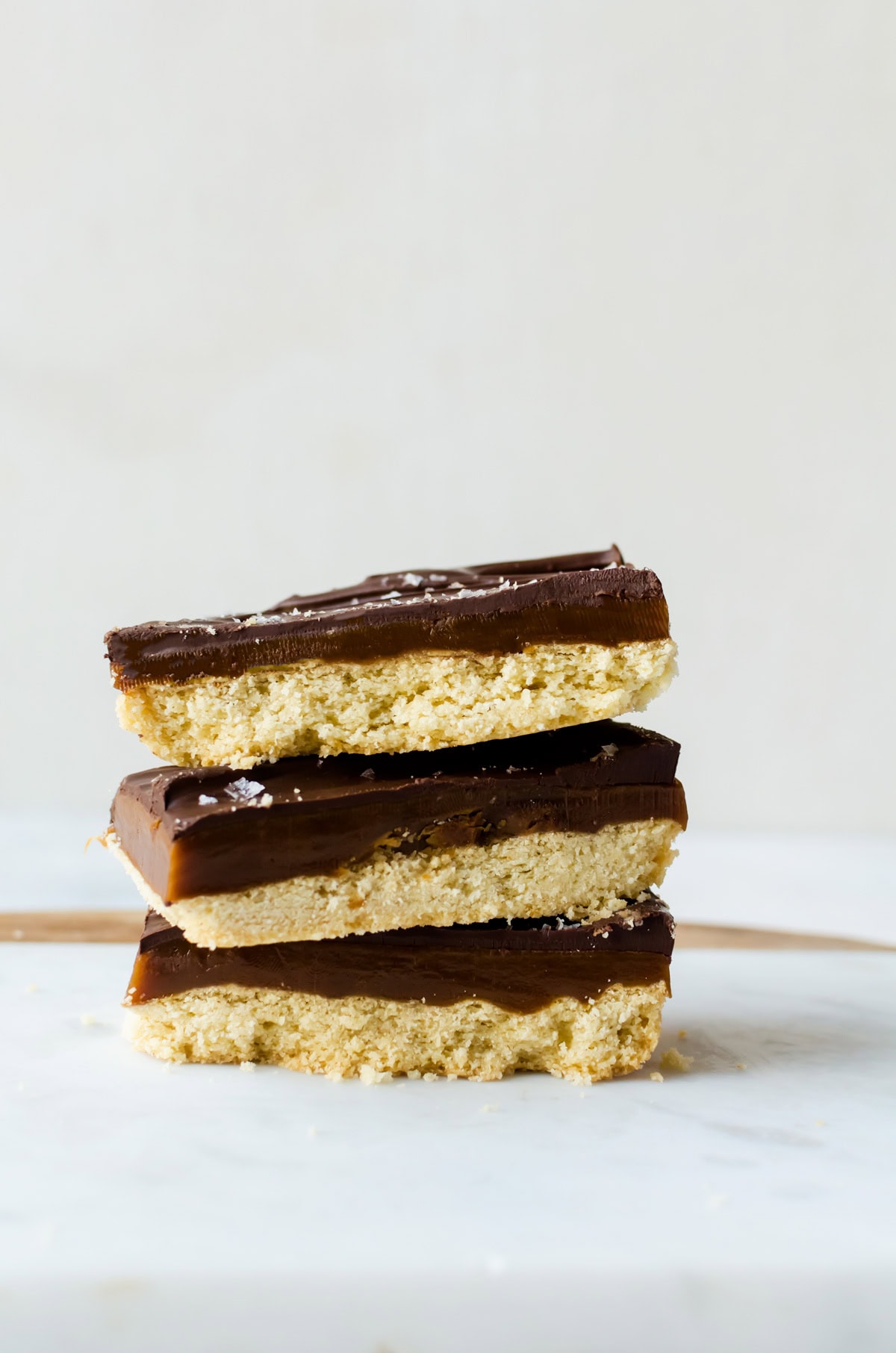
These homemade Twix bars have a crisp, buttery shortbread base, a thick layer of chewy salted caramel, and a smooth dark chocolate topping. They're a fun, surprisingly easy way to make your own version of a favorite candy bar, without dipping every piece individually. And I have a little trick for getting neat bars without breaking the shortbread!
Why You'll Love These Homemade Twix Bars
There's something so satisfying about making your own version of a favorite candy bar! These are a fun little baking project, and they're easier to make than you might think.
- A fun homemade treat. Why buy Twix bars when you can make your own? There's something extra special about layering buttery shortbread, chewy caramel, and chocolate yourself.
- Surprisingly easy to make. Just three simple layers, all made in one pan. You don't have to dip individual bars in chocolate!
- Perfect for holiday gifting. Wrap them individually or tuck a few into a homemade candy box for a thoughtful, delicious gift.
- A delicious addition to cookie trays. The crisp shortbread and chewy caramel bring something a little different to your holiday cookie platter.
- Fun to share. Bring them to a party, surprise a friend, or keep a batch at home for whenever a chocolate-and-caramel craving strikes.
Ingredient Overview
- Unsalted butter: You'll need softened butter for the shortbread so it blends easily in the food processor, plus a little butter for the caramel. Shortbread has so few ingredients that it's worth using a good-quality butter you love! If yours is still cold, here's how to soften butter quickly.
- Light corn syrup: Don't let this ingredient put you off! Regular corn syrup isn't the same as high-fructose corn syrup. It helps prevent the sugar in our caramel from crystallizing, so we get that beautifully smooth, chewy filling. I don't recommend substituting it in this tested recipe.
- Heavy cream: Use full-fat heavy cream for the caramel. Lower-fat dairy hasn't been tested here and may change how the filling sets.
- Pure vanilla extract: A little vanilla rounds out the caramel's flavor. I've been using Rodelle vanilla for years, including when developing recipes for my cookbook, and it's still my favorite.
- Dark chocolate: Traditional Twix uses milk chocolate, but I love how the slightly bitter flavor of dark chocolate balances all that sweet, salty caramel. Use good-quality chocolate that melts smoothly, or swap in milk chocolate if you want a flavor closer to the classic bar.
- Refined coconut oil: Choose refined coconut oil for its neutral flavor. Unrefined coconut oil can taste like coconut, and we don't want it competing with the caramel and chocolate. Just a little oil helps make the melted chocolate easier to spread and slice.
You'll find the complete ingredient list and measurements in the recipe card below.
How to Make Homemade Twix Bars
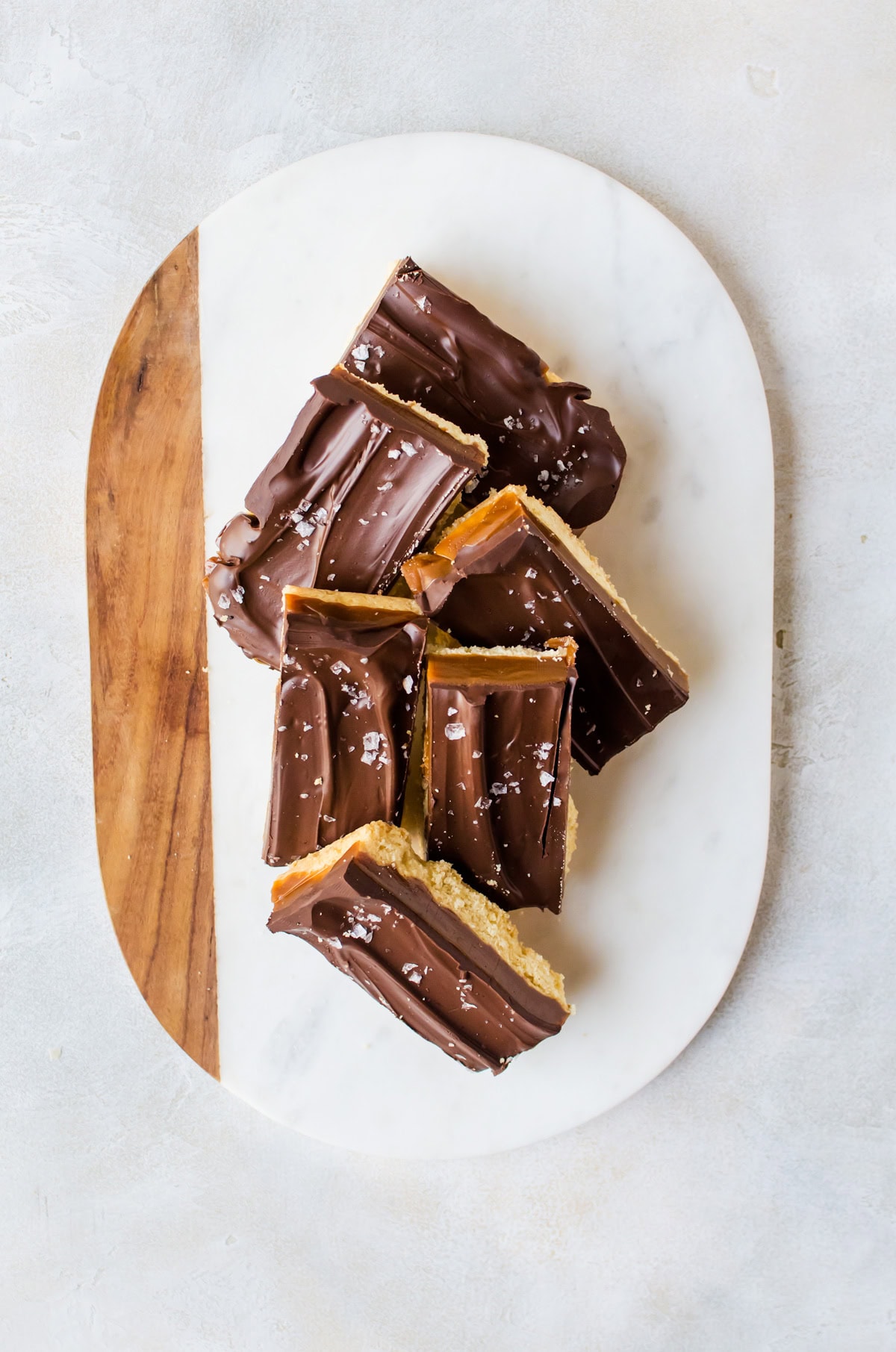
There are just three layers to make: buttery shortbread, homemade caramel, and melted chocolate. The hands-on work is straightforward, but give yourself time for each layer to cool. It's a great recipe to work on while you're doing other things in the kitchen!
- Make the shortbread. Pulse the ingredients in a food processor until crumbly, press into a lined pan, and bake until lightly golden. After about five minutes, cut the warm shortbread into bars without taking them out of the pan.
- Cook the caramel. Combine the caramel ingredients in a large, heavy-bottomed saucepan and cook until the mixture reaches 248°F (120°C). Your candy thermometer is the best way to know when it's ready.
- Add the caramel layer. Carefully stir the butter and vanilla into the finished caramel, pour it over the shortbread, and let it cool before adding chocolate.
- Finish with chocolate. Melt the chocolate and stir in the refined coconut oil, then spread over the caramel. Let it firm at room temperature, or refrigerate briefly if you want to cut your bars sooner.
- Cut into bars. Once the chocolate has set, use a sharp knife to cut through the toppings, following the cuts you already made in the shortbread.
You'll find the complete step-by-step instructions, temperatures, and timing in the recipe card below.
Expert Baking Tips
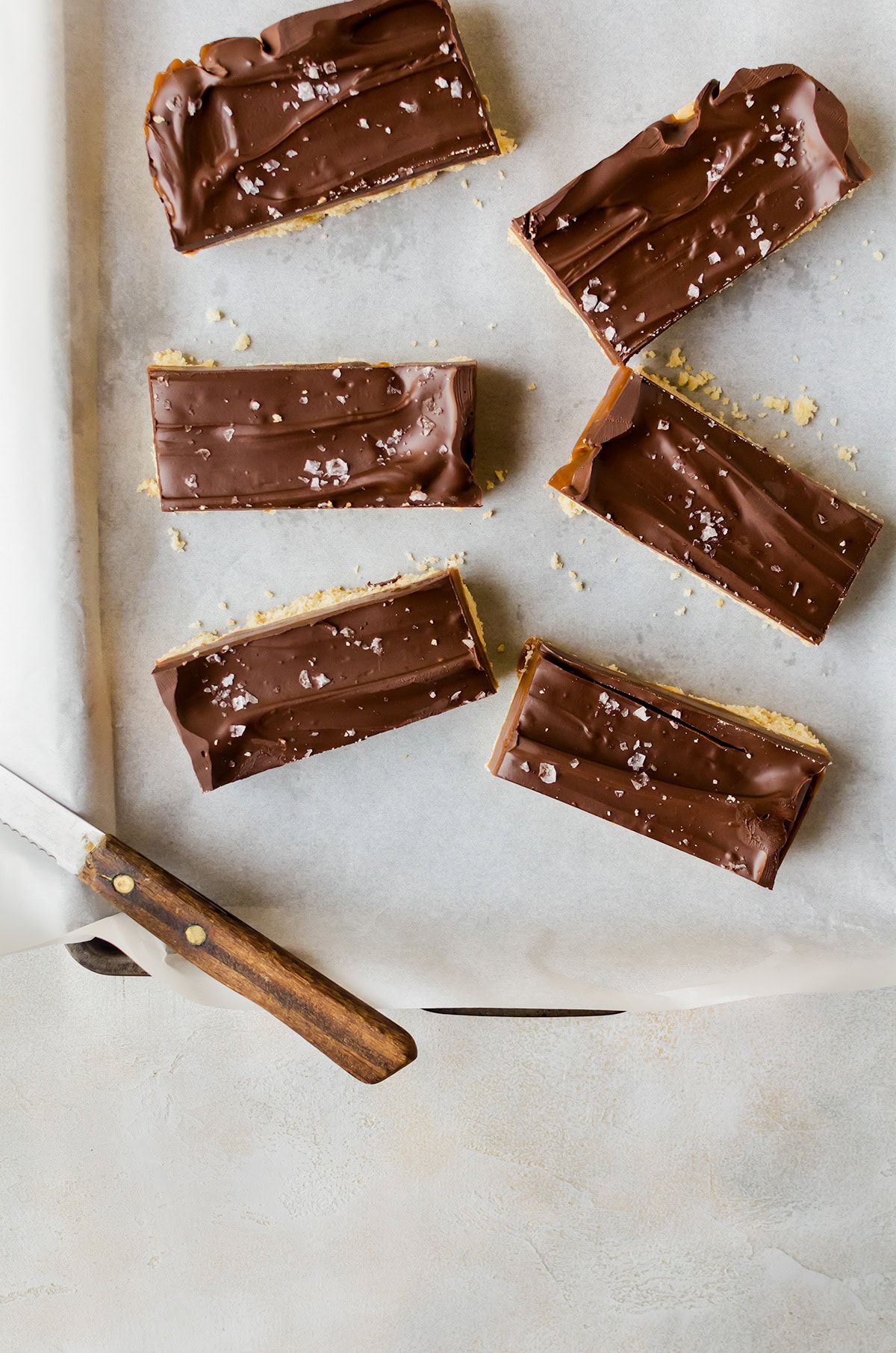
- Cut the shortbread while it's warm. This is my favorite trick! If you wait until all three layers are set, the shortbread can break unevenly. Instead, let it rest about five minutes after baking, cut it into bars, and leave everything in the pan. Those first cuts will guide you when you slice the finished bars.
- Use good-quality butter. With so few ingredients in the shortbread, the butter really gets to shine. This is one of those times when I think it's worth using a butter you absolutely love!
- Watch the caramel, but trust your thermometer. The mixture will bubble vigorously, thicken, and develop a beautiful golden color as it cooks. Don't panic if it takes longer than the recipe suggests. What matters is reaching 248°F (120°C), which gives us caramel that's wonderfully chewy but firm enough to cut.
- Choose a very large, heavy-bottomed saucepan. The caramel bubbles up much more than you might expect! A heavy pan heats more evenly, and those extra-high sides can save your stovetop from a sticky mess.
- Don't stir once it boils. Stirring boiling caramel can encourage crystallization. If sugar crystals collect on the sides of the pot, wash them down gently with a damp pastry brush.
- Let the layers cool. Allow the shortbread to cool before adding the hot caramel, and let the caramel cool before spreading the melted chocolate. Otherwise, the layers may blend into each other.
- Set the chocolate your way. Chilling makes it firm faster, but it's not required. Letting it set at cool room temperature takes longer and may make slicing easier because the chocolate isn't as cold and brittle.
- Make them gift-ready. If you're assembling holiday cookie boxes, cut the shortbread into smaller portions at the beginning. Once the finished bars are fully set, separate with parchment paper or wrap them individually.
Variations and Substitutions
These bars are delicious as they are, but there's plenty of room to have fun with the chocolate and caramel!
- Add some crunch. Sprinkle chopped toasted pecans, almonds, or peanuts over the warm caramel after you pour it into the pan. Press them in gently before the caramel sets.
- Try milk chocolate. Swap the dark chocolate for milk chocolate for a sweeter topping that's closer to the candy bar you know.
- Experiment with white chocolate. Good-quality white chocolate makes a sweeter, creamier topping if that's your thing.
- Make a chocolate swirl. Spread melted dark chocolate over the caramel, add small spoonfuls of melted white chocolate, and gently swirl the two together with a toothpick or skewer before they set.
And if you love caramel as much as I do, you should try my homemade salted caramel sauce! It's fantastic over brownies and ice cream. Just don't substitute a pourable caramel sauce for the firmer caramel filling in these bars; it won't set the same way.
How to Store
- Room temperature: Keep the finished bars in an airtight container in a cool, dry spot for up to four days. Separate layers with parchment paper if you're stacking them. This is how I prefer to store them so the shortbread stays crisp.
- Warm kitchens: If your kitchen is especially warm or humid and the chocolate starts getting soft, refrigerate the bars as needed. Let them come toward room temperature before serving for a better texture.
- Setting versus storing: You can chill the bars briefly to harden the chocolate and make cutting faster, but you don't need to keep them refrigerated afterward if your kitchen is cool and dry.
Recipe FAQs
Grainy caramel usually means some of the sugar crystallized during cooking. Keep the light corn syrup in the recipe, avoid stirring once the mixture begins boiling, and use a damp pastry brush to wash any sugar crystals down from the sides of the saucepan.
I strongly recommend one! We're aiming for 248°F (120°C) so the caramel sets with that delicious chewy texture. A small spoonful dropped into cold water should form a firm but pliable ball, but the thermometer is a much more reliable way to get it right.
I wouldn't swap in a regular jar of caramel sauce. Most are meant to stay pourable, while the homemade caramel in this recipe needs to set firmly enough to slice into bars. If you're craving a drizzleable version, try my homemade salted caramel sauce instead.
Chocolate can get brittle when it's very cold. If you chilled the bars to speed up setting, let them sit at room temperature briefly before cutting. Follow the cuts you made in the shortbread and wipe your knife between slices as needed.
Not for short-term storage in a cool, dry kitchen. I prefer keeping them in an airtight container at room temperature to help the shortbread stay crisp. Refrigeration is helpful if your kitchen is unusually warm or if you want the chocolate to firm up faster before cutting.
More Homemade Candy and Chocolate Treats
If you love homemade candy, my pretzel toffee bark is another buttery, crunchy treat that's perfect for sharing. Try my maple caramel candies with hazelnuts if caramel is your favorite part, or make some white chocolate covered Oreos for an easy gift-box addition.
Recipe Card
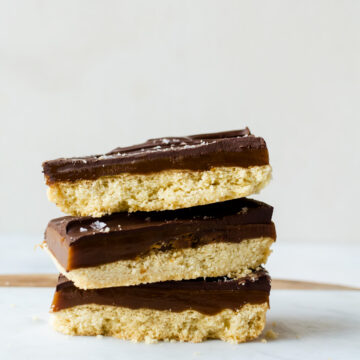
Homemade Twix Bars
Ingredients
Shortbread
- 1 cup all-purpose flour
- ½ cup unsalted butter softened
- ¼ cup granulated sugar
- ¼ teaspoon salt
Salted Caramel
- 1½ cups granulated sugar
- ⅓ cup light corn syrup
- 1½ cups heavy cream
- 1 teaspoon salt
- 1 teaspoon pure vanilla extract
- 1 tablespoon unsalted butter
Chocolate Topping
- 6 ounces chocolate preferably dark
- 1 teaspoon refined coconut oil

Instructions
- Prepare the pan. Preheat the oven to 350°F (175°C). Line an 8 × 8-inch baking pan with parchment paper, leaving enough overhang to lift the bars out later.
- Make the shortbread. Add the flour, softened butter, sugar, and salt to a food processor. Pulse until the mixture resembles large crumbs. Press the mixture firmly and evenly into the prepared pan, then prick the surface several times with a fork.
- Bake and cut the shortbread. Bake for 35–40 minutes, until lightly golden. Cool for approximately 5 minutes, then carefully cut the shortbread into 12 bars while it's still warm. Leave the pieces in the pan to cool.
- Prepare the caramel. In a very large, heavy-bottomed saucepan, combine the sugar, corn syrup, heavy cream, and salt. Stir to combine before heating.
- Cook the caramel. Heat over medium-high heat without stirring once the mixture begins boiling. Use a damp pastry brush to wash down any sugar crystals along the sides of the pan. Continue cooking until the caramel reaches 248°F (120°C), approximately 8–10 minutes. Use the temperature rather than the cooking time to determine doneness. Be careful, as the mixture can bubble up considerably.
- Finish the caramel. Remove the saucepan from the heat and carefully stir in the butter and vanilla. The caramel will be extremely hot and may bubble when the ingredients are added.
- Add the caramel layer. Pour the caramel evenly over the cooled shortbread, spreading it into the corners. Allow the caramel to cool and set before continuing.
- Add the chocolate. Melt the chocolate over a double boiler, then stir in the refined coconut oil until smooth. Spread evenly over the cooled caramel.
- Set and cut. Allow the chocolate to harden at room temperature, or refrigerate briefly to speed up setting. Once firm, cut through the caramel and chocolate, following the original cuts in the shortbread. If the chocolate is too cold and brittle, let it stand briefly at room temperature before cutting.
Notes
- Cut the shortbread while warm: Wait about 5 minutes after baking, then cut it into bars without removing the pieces from the pan.
- Use a candy thermometer: Cook the caramel to 248°F (120°C) for the proper chewy texture.
- Choose a large saucepan: The caramel bubbles up significantly as it cooks.
- Avoid crystallization: Don't stir once the caramel begins boiling. Use a damp pastry brush to wash sugar crystals from the sides of the pot.
- Keep the corn syrup: Regular corn syrup isn't the same as high-fructose corn syrup. It's important for the texture of this caramel and shouldn't be substituted.
- Use refined coconut oil: It has a neutral flavor, unlike unrefined coconut oil.
- Let the layers cool: The shortbread should be cool before adding caramel, and the caramel should be cool before spreading the chocolate.
- Setting the chocolate: Room-temperature setting is fine, although it takes longer than refrigeration.
- Storage: Keep the finished bars in an airtight container in a cool, dry place for up to four days. If your kitchen is particularly warm, refrigerate as needed and bring toward room temperature before serving.


Leave a Reply