
Knowing how to freeze cookie dough means you can have warm, freshly baked cookies whenever the craving strikes! Learn how to properly prepare, freeze, store, and bake different types of cookie dough without sacrificing flavor or texture.

Why You'll Love Freezing Cookie Dough
- Fresh cookies anytime. Bake one or two cookies whenever you're craving something sweet without having to make an entire batch.
- Get ahead on holiday baking. Prepare several types of cookie dough weeks before you need to bake them.
- Easy entertaining. You'll always have something delicious to offer unexpected guests.
- Less waste. Freeze whatever cookie dough you don't need right away instead of baking more cookies than you can eat.
If you're freezing dough to get a head start on holiday cookie boxes, my holiday cookie baking planner helps you figure out what to make, how many batches you'll need, and when to prepare them. The free workbook includes shopping lists and baking schedules, too.
What Types of Cookie Dough Can You Freeze?
Most cookie doughs freeze beautifully, but how you prepare them for freezing will depend on the type of cookie you're making.
- Chocolate chip cookies. Classic chocolate chip cookies, brown butter chocolate chip cookies, coffee chocolate chip cookies, and espresso chocolate chip cookies are all excellent for freezing.
- Drop cookies. Most drop cookies, including oatmeal cookies, peanut butter cookies, my sprinkle sugar cookies, and triple ginger spice cookies, freeze well when individually portioned.
- Cookies rolled in sugar or spices. Cookies like my brown butter snickerdoodles freeze well, but it's best to add the sugar coating just before baking.
- Slice-and-bake cookies. You can freeze cookies like my cinnamon roll cookies as a whole log or individually sliced cookies.
- Cut-out cookies. You can freeze the dough for cut-out sugar cookies and gingerbread cookies before or after cutting out the shapes.
- Stuffed cookies. Many stuffed cookies freeze well, depending on the type of filling used.
- Cookie bars. Most traditional cookie doughs used for cookie bars can also be frozen before baking.
If you're looking for even more cookie recipes to make ahead, my cookbook, Cookie School, is filled with delicious cookie recipes and tips to help you make your perfect cookie!
What Cookie Dough Doesn't Freeze Well?
Delicate cookies that rely heavily on whipped eggs or egg whites for their structure are generally not good candidates for freezing before baking. Freezing the unbaked batter can affect the air incorporated during mixing, resulting in a loss of volume or changes in texture.
This includes my meringue kisses and French macarons. Macarons are better frozen after baking, while I recommend storing meringue kisses at room temperature in an airtight container because they're particularly sensitive to moisture.
I also prefer freezing delicate spritz cookies and intricately shaped cut-out cookies after baking to avoid damaging their shapes.

What You'll Need
You don't need much to freeze cookie dough, and the exact tools you'll need will depend on the type of cookie you're making.
- Cookie scoop - Helps you portion your dough evenly so the cookies bake at the same rate.
- Parchment paper - Prevents the cookie dough from sticking to your baking sheet or other portions of dough.
- Baking sheet - Allows you to freeze multiple portions of cookie dough at once.
- Airtight container - Use a freezer-safe container that seals tightly.
- Plastic wrap or freezer-safe storage bags - Helps protect the dough from air exposure and moisture loss.
- Labels and a marker - To keep track of the cookie dough and baking instructions. I've recently started using a label maker, and it's honestly changed my life! It makes keeping my freezer organized so much easier.
Chill Your Cookie Dough Before Freezing
One of the things I talk about quite a bit in my cookbook, Cookie School, is the importance of chilling your cookie dough. I especially recommend it if you want to develop a deeper, more complex flavor in your cookies.
As cookie dough rests in the refrigerator, a few things happen:
- The flour hydrates. The flour gradually absorbs moisture from the other ingredients, which can improve the consistency and texture of the dough.
- The flavors develop. Giving the ingredients time to rest together can create a more pronounced, complex flavor in the finished cookie.
- The fat firms up. Colder butter takes longer to melt in the oven, which can help control how much the cookies spread.
Resting cookie dough can also influence how the cookies brown and develop their texture during baking.
Freezing your cookie dough is not a substitute for chilling it in the refrigerator. Once the dough is frozen, the processes responsible for flour hydration and flavor development slow to the point that their benefits are practically negligible compared to resting the dough in the refrigerator. You won't get the same benefits from freezing your cookie dough overnight as you would from refrigerating it overnight.
If your recipe calls for chilling, complete the recommended chilling time before freezing. Even when a recipe doesn't require chilling, many butter-based drop cookies benefit from some time in the refrigerator. I explain more about why you should chill cookie dough before baking and how long to rest it in my dedicated guide.
If your cookie dough becomes difficult to scoop after chilling, you can portion it out before refrigerating and allow the individual portions to rest before freezing.
How to Freeze Cookie Dough
Drop Cookies
This method works particularly well for chocolate chip cookies, oatmeal cookies, and most other drop cookies.
- Prepare the cookie dough. Make the dough as directed in the recipe, including any recommended chilling time.
- Portion the dough. Use a cookie scoop to divide the dough into the size you intend to bake. If you like topping your cookies with extra chocolate chips, chocolate chunks, or nuts, press them into the dough now.
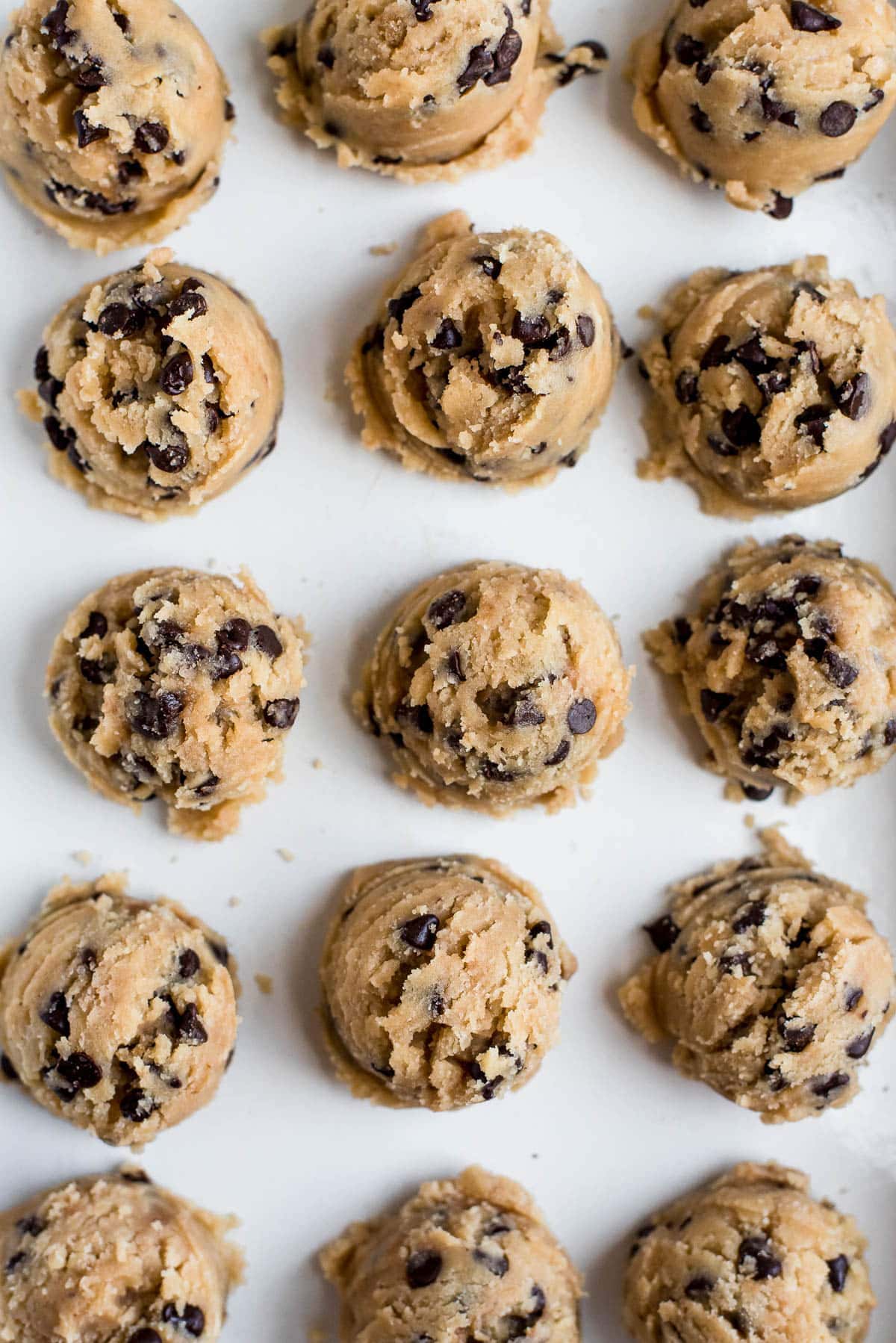
- Freeze individually. Arrange the cookie dough balls in a single layer on a parchment-lined baking sheet. They can be close together, but shouldn't touch. Freeze for 1 - 2 hours, or until firm enough to handle without losing their shape.
- Transfer and store. Place the frozen cookie dough balls in a freezer-safe airtight container or storage bag, separating layers with parchment paper. Remove as much excess air as possible and seal tightly.
Freezing the cookie dough balls individually before transferring them to a container keeps them from sticking together. This makes it easy to take out exactly as many cookies as you want to bake.
I recommend using parchment paper between layers whenever you're storing individually portioned cookie dough, regardless of the type of cookie you're making. This is especially helpful if you plan on thawing the dough before baking, as the dough can become sticky again as it softens.
Cookies Rolled in Sugar or Other Coatings
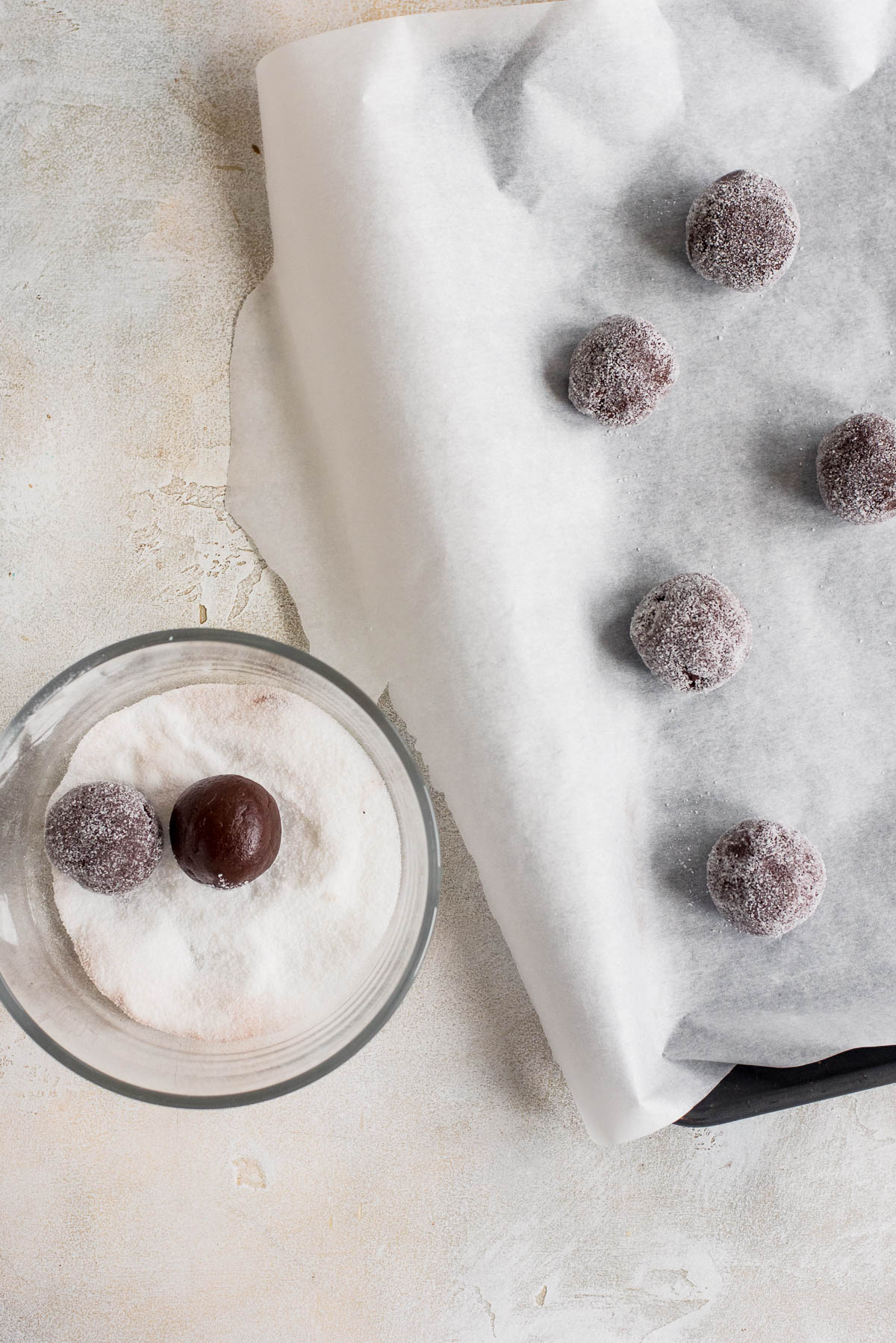
If you're freezing snickerdoodles, molasses cookies, or other cookies rolled in sugar, spices, or sprinkles, I recommend waiting to add the coating until you're ready to bake.
Sugar can absorb moisture from the dough during storage, which can affect the appearance and texture of the coating.
- Prepare and chill the cookie dough as directed.
- Portion the dough without adding the coating.
- Freeze the dough balls on a lined baking sheet until firm.
- Transfer to a freezer-safe airtight container, separating layers with parchment paper.
When you're ready to bake, allow the dough to soften slightly so the coating will stick. Roll the dough in the coating and bake.
This is especially important for chocolate crinkle cookies rolled in powdered sugar.
Slice-and-Bake Cookies
You can freeze slice-and-bake cookie dough as a whole log or slice it into individual cookies before freezing.
To freeze as a log:
- Prepare the cookie dough and shape it into a log as directed in the recipe.
- Wrap the log tightly in plastic wrap, making sure the ends are sealed.
- Place the wrapped dough inside a freezer-safe airtight container or storage bag.
- When ready to bake, allow the dough to soften just enough to slice without cracking or crumbling. Slice and bake as directed, adding extra baking time if needed.
To freeze individual slices:
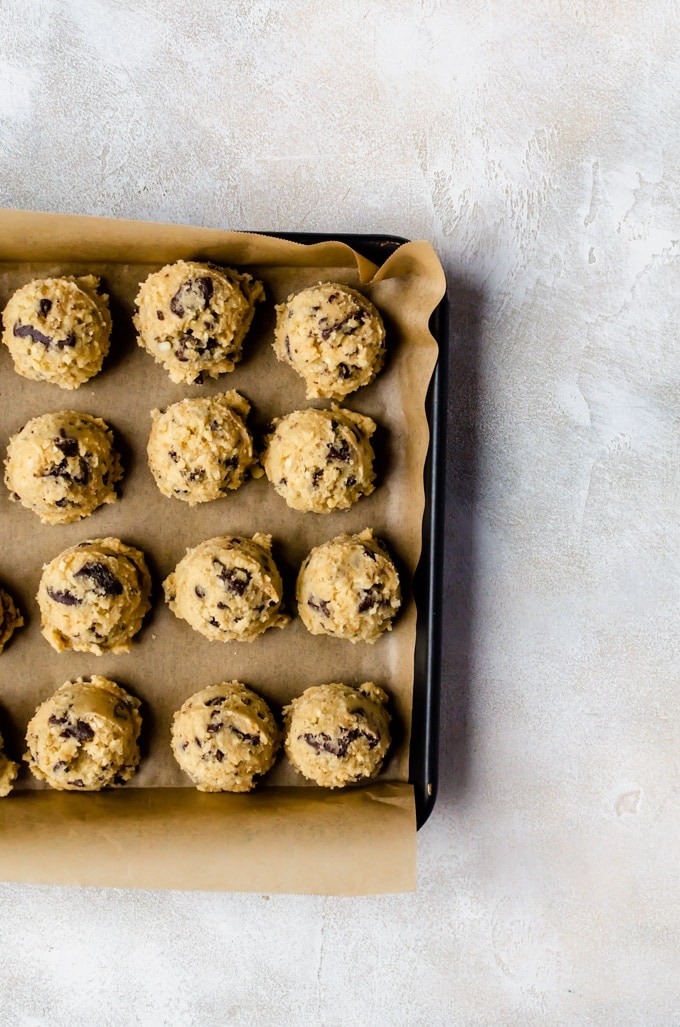
Slice the dough before freezing, arrange the cookies on a parchment-lined baking sheet, and freeze until firm. Transfer to an airtight container, separating the layers with parchment paper.
I recommend freezing individual slices if you only want to bake a few cookies at a time.
Cut-Out Cookies
You can freeze cut-out cookie dough in discs, rolled-out sheets, or individual cookie shapes.
To freeze discs of dough:
- Divide the prepared dough into manageable portions and flatten each into a disc.
- Wrap each disc tightly in plastic wrap.
- Place inside a freezer-safe airtight container or storage bag.
Thaw the dough overnight in the refrigerator before rolling and cutting.
To freeze rolled-out dough:
Roll the cookie dough between sheets of parchment paper to the thickness specified in your recipe. Place the dough on a flat surface, wrap it well, and freeze.
Allow the dough to soften enough to cut cleanly with your cookie cutters before baking.
To freeze cut-out cookie shapes:
- Prepare and roll out the cookie dough as directed.
- Cut out your desired shapes and arrange them on a parchment-lined baking sheet.
- Freeze for 1 - 2 hours, or until firm.
- Transfer to an airtight container, separating the layers with parchment paper.
Be particularly careful with cookie cutters that have delicate points or narrow details, as these pieces can easily break when frozen.
I generally prefer freezing intricately shaped cut-out cookies after baking.
Stuffed Cookies
Whether you should freeze stuffed cookies with or without the filling depends on what you're using to fill them.
Fillings like chocolate, brownie batter, and many nut butters are generally good candidates for freezing.
Fillings containing fresh fruit, custard, or certain dairy-based mixtures may release moisture or change texture after freezing and thawing. Whenever possible, add delicate fillings after thawing the dough or after baking, depending on the recipe.
For fillings that freeze well:
- Assemble the stuffed cookies as directed.
- Make sure the filling is completely enclosed in the cookie dough.
- Freeze the individual cookies on a lined baking sheet until firm.
- Transfer to a freezer-safe airtight container, separating the layers with parchment paper.
Stuffed cookies are often thicker than traditional drop cookies, so pay particular attention to the baking temperature and time to ensure the dough bakes through without overbrowning the outside.
Cookie Bars
Most traditional cookie bar doughs can be frozen before baking.
Press the prepared dough into a parchment-lined, freezer-safe container or metal baking pan. Wrap tightly and freeze.
Thaw the dough overnight in the refrigerator before baking. Depending on how cold the dough is when it goes into the oven, you may need to adjust the baking time.
If your cookie bars contain delicate fillings or multiple layers, I generally recommend freezing the finished bars instead.
How Long Can You Freeze Cookie Dough?
For the best flavor and texture, I personally prefer to use frozen cookie dough within four weeks and generally don't keep it in the freezer for longer than six weeks.
I've never personally stored homemade cookie dough for longer than six weeks, so that's the timeframe I'm most comfortable recommending based on my own experience.
However, according to University of Illinois Extension freezer storage guidelines, properly packaged cookie dough can be frozen for up to three months at 0°F (-18°C).
If you plan on storing your cookie dough for that long, I recommend keeping it toward the back of your freezer, away from the door, or in a deep freezer that maintains a consistent temperature.
The longer cookie dough is stored, the greater the opportunity for changes in flavor and texture, even when it's packaged well.
My storage recommendations are based primarily on maintaining the best possible flavor and texture rather than a strict food safety expiration date.
How to Prevent Freezer Burn
Freezer burn happens when frozen food loses moisture from its surface. It can leave your cookie dough with dry patches and negatively affect the flavor and texture of your cookies.
Even well-packaged cookie dough can experience changes in quality over time, particularly if the freezer temperature fluctuates.
To help prevent freezer burn:
- Use containers and storage bags specifically designed for freezer storage.
- Remove as much excess air from the packaging as possible.
- Wrap logs, discs, and larger portions of dough tightly before placing them inside an airtight container.
- Maintain a freezer temperature of 0°F (-18°C) or below.
- Store cookie dough away from the freezer door, where it is less exposed to temperature changes.
- Avoid repeatedly thawing and refreezing the dough.
Don't Forget to Label Your Cookie Dough
It's surprisingly easy to forget which cookies are which once you've frozen several different types!
I recommend labeling each container with the cookie name, freezing date, recommended baking temperature, and baking time. You can also include reminders about any coatings or toppings that need to be added before baking.
How to Bake Frozen Cookie Dough
One of the best things about freezing cookie dough is that you don't always have to wait for it to thaw before baking.
Most individually portioned drop cookies can go straight from the freezer to a preheated oven.
There are two different ways I recommend baking frozen cookie dough, depending on the texture you want.
Method 1: Bake at the Original Temperature
Bake your frozen cookie dough at the temperature specified in the recipe, adding a few extra minutes to the baking time as needed.
Because the dough is frozen, the outside of the cookie can begin to set before the center has warmed enough to spread fully.
This often results in a thicker cookie with a softer center and more pronounced browning around the edges.
Method 2: Lower the Baking Temperature
If you want your cookies to be closer in texture to cookies baked from unfrozen dough, try lowering the oven temperature by approximately 20°F (11°C) and increasing the baking time as needed.
The slightly lower temperature gives the dough more time to warm and spread before the outside of the cookie sets.
Both methods work well for many types of cookies, and the differences aren't always significant. The results will depend on the size of the cookie, the ingredients, and the original baking temperature.
I recommend baking a test cookie using each method to see which gives you the texture you prefer!
When Should You Thaw Cookie Dough Before Baking?
While most drop cookies can be baked directly from frozen, other cookie doughs benefit from thawing first.
- Dough that needs to be rolled out or shaped should be thawed until pliable.
- Slice-and-bake cookie logs should soften enough to slice without breaking.
- Cookies that need a sugar or spice coating may need to soften slightly so the coating sticks.
- Particularly large or thick stuffed cookies may bake more evenly if partially thawed in the refrigerator first.
For larger portions of dough, thaw overnight in the refrigerator rather than leaving them on the counter for an extended period.
Troubleshooting Frozen Cookie Dough
My cookies aren't spreading enough. Try lowering the baking temperature slightly or allowing the cookie dough to partially thaw before baking. If the problem persists, make sure you haven't accidentally added too much flour when preparing the dough.
My cookies are browning too quickly. The outside of the cookie may be baking faster than the frozen center. Try reducing the oven temperature and allowing for a longer baking time.
My cookies are still raw in the middle. Larger and thicker cookies need additional time to bake through. Try a slightly lower baking temperature, smaller portions, or partially thawing the dough in the refrigerator before baking.
My cookie dough has a strange flavor or dry patches. This may be a sign of freezer burn or odors absorbed from other foods in the freezer. Make sure the dough is tightly sealed and stored for the recommended amount of time.
Should You Freeze Cookie Dough or Baked Cookies?
I generally prefer freezing cookie dough whenever possible because nothing beats a freshly baked cookie!
However, freezing baked cookies can be more convenient when preparing large quantities of cookies for the holidays, particularly if you want to decorate, package, or serve them quickly.
| Type of cookie | Recommended freezing method |
|---|---|
| Chocolate chip cookies | Unbaked dough |
| Oatmeal cookies | Unbaked dough |
| Snickerdoodles | Unbaked, uncoated dough |
| Shortbread cookies | Baked or unbaked |
| Slice-and-bake cookies | Unbaked dough |
| Cut-out sugar cookies | Baked or unbaked |
| Intricate cut-out cookies | Baked |
| Macarons | Baked |
| Biscotti | Baked |
| Spritz cookies | Baked |
| Stuffed cookies | Depends on the filling |
How to Freeze Baked Cookies
Allow your cookies to cool completely before freezing. Place them inside a freezer-safe airtight container, separating layers with parchment paper to prevent them from sticking together.
Whenever possible, freeze cookies before adding glazes, frostings, or delicate decorations. Certain toppings can become sticky, soften, or develop condensation as the cookies thaw.
Allow the cookies to thaw while still covered to help minimize condensation directly on their surfaces.
Many unfilled, undecorated cookies can be refreshed in a 300°F (150°C) oven for about five minutes after thawing. Allow them to cool slightly before enjoying.
Delicate cookies, such as macarons, should be thawed according to the needs of their fillings and handled carefully to avoid breaking their shells.
Frequently Asked Questions
Yes! Most traditional homemade cookie doughs containing eggs freeze well when properly packaged and stored at 0°F (-18°C) or below. Freezing doesn't eliminate harmful bacteria that may be present in raw eggs or flour, so the dough still needs to be baked before eating.
Most individually portioned drop cookies can be baked directly from frozen. Larger portions of dough, such as logs or discs, generally need to soften before you can slice, roll, or shape them.
Yes, most traditional cookie doughs made with baking soda or baking powder freeze well. However, the effectiveness of the leavening and the final texture of the cookies can vary depending on the recipe and how long the dough has been stored.
Yes, but you'll need to thaw the dough in the refrigerator before portioning and baking. I prefer freezing individual portions whenever possible because it's more convenient and allows you to bake exactly as many cookies as you want.
Cookie dough that has been thawed safely in the refrigerator and kept at 40°F (4°C) or below can generally be refrozen. However, repeated freezing and thawing can affect the quality of the dough, so I recommend only removing as much dough as you need.
Most homemade cookie dough can be refrigerated in an airtight container for two to four days, depending on the recipe. If you don't plan on baking it within that timeframe, freezing is a better option.
Many baked sandwich cookies freeze well, but it depends on the filling. Chocolate ganache, many buttercreams, and some jams freeze well, while other fillings may separate or release moisture. When in doubt, freeze the individual cookies and add the filling after thawing.
Recipe Card

How to Freeze Cookie Dough
Equipment
- 1 baking sheet
- 1 sheet parchment paper
- 1 cookie scoop
- 1 - 2 airtight containers
- 1 label maker optional
Ingredients
- 1 batch cookie dough

Instructions
- Prepare the cookie dough according to the recipe instructions, including any recommended chilling time.
- Line a baking sheet with parchment paper.
- Portion the cookie dough into evenly sized balls. If desired, press additional chocolate chips, chocolate chunks, or nuts into the tops of the cookies.
- Arrange the cookie dough balls on the prepared baking sheet in a single layer, making sure they aren't touching.
- Freeze for 1 - 2 hours, or until the dough is firm enough to handle without losing its shape.
- Transfer the frozen cookie dough to a freezer-safe airtight container or storage bag, separating layers with parchment paper. Remove as much excess air as possible and seal tightly.
- Label the container with the cookie name, freezing date, and baking instructions.
- Store toward the back of the freezer at 0°F (-18°C) or below. For the best flavor and texture, use within four to six weeks.
- When ready to bake, remove as many cookies as desired and bake using one of the following methods:
- Bake at the original recipe temperature, adding a few extra minutes as needed.
- Reduce the original baking temperature by approximately 20°F (11°C) and increase the baking time as needed for cookies that spread more similarly to unfrozen dough.
- Use the doneness cues provided in the original recipe, ensuring the cookie dough is baked through.
Notes
- Chilling: Complete any recommended refrigerator chilling time before freezing. This allows the flour to hydrate and the flavors to develop. Freezing is not a substitute for refrigerating your cookie dough, as these processes slow to the point that their benefits are practically negligible once the dough is frozen.
- Storage: I personally recommend using frozen cookie dough within four to six weeks for the best quality. Properly packaged dough may be stored for up to three months when continuously frozen at 0°F (-18°C) or below.
- Prevent sticking: Separate layers of individually portioned cookie dough with parchment paper. This is especially important if you plan to thaw the dough before baking, as it can become sticky again as it softens.
- Sugar-coated cookies: Freeze without the coating. Allow the dough to soften slightly before rolling in sugar, spices, or powdered sugar immediately before baking.
- Slice-and-bake cookies: Freeze tightly wrapped logs of cookie dough or individual slices. Separate layers of individual slices with parchment paper. Allow frozen logs to soften enough to slice cleanly.
- Cut-out cookies: Freeze as wrapped discs, rolled-out sheets, or individual cut-out shapes. Separate cut-out shapes with parchment paper.
- Stuffed cookies: Freeze assembled cookies if the filling freezes well. Separate layers with parchment paper. Larger stuffed cookies may benefit from partially thawing in the refrigerator before baking.
- Baking: I recommend baking a test cookie to determine the best temperature and baking time for your particular dough.
- Food safety: Freezing does not make raw cookie dough safe to eat. Always bake traditional cookie dough before consuming.



Connie Alderson says
Thank you, Amanda, for share all these delicious tips and recipes! I can’t wait to start planning my own Christmas Cookie Fest!